Automated Phone Screening for Hiring at Scale
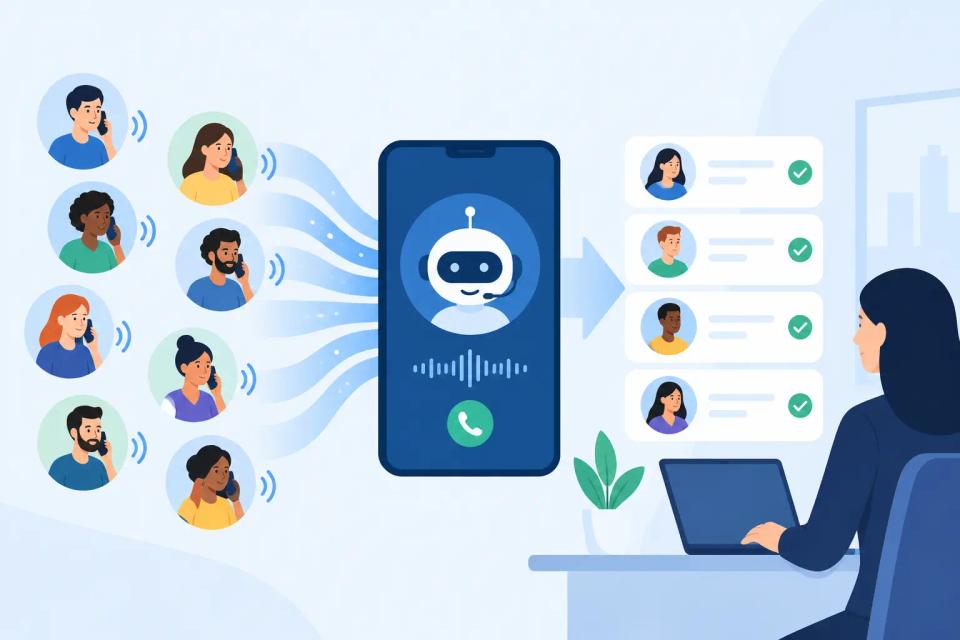
A high-volume job posting can generate hundreds of applications before a recruiter has finished reviewing the first 20. That gap creates delays, inconsistent follow-up, and candidate drop-off. Automated phone screening for hiring closes it by engaging applicants quickly, collecting the same job-relevant information from every candidate, and moving qualified people forward without waiting for manual scheduling.
For talent teams filling hourly, frontline, operations, staffing, or other high-volume roles, the goal is not to replace sound hiring judgment. It is to remove the repetitive work that keeps recruiters from spending time with the candidates who have the strongest potential fit.
What automated phone screening does
Automated phone screening places an early-stage conversation directly into the hiring workflow. After a candidate applies, the system can invite them to complete a phone-based screen, ask a structured set of role-specific questions, capture responses, and route the completed screen for review or next-step progression.
This is different from asking a recruiter to call every applicant with the same availability, location, work authorization, experience, and interest questions. The automated process handles the repeatable first-pass conversation at scale. Recruiters receive consistent information they can use to prioritize candidates rather than scattered notes from dozens of calls.
For many roles, an effective first screen confirms whether a candidate meets core requirements and is ready to proceed. It can gather details such as shift availability, commute range, certification status, relevant experience, start-date timing, and compensation alignment. The questions should reflect the actual needs of the job, not serve as a longer version of the application.
Why early screening is a hiring bottleneck
Resume review is only one source of friction. Even after teams identify promising applicants, coordinating an initial call can take days. Candidates may be working, unavailable during business hours, or applying to several employers at once. By the time a recruiter reaches them, they may have accepted another offer or stopped responding.
Manual screens also produce uneven data. One recruiter may ask about schedule flexibility first. Another may focus on experience. A third may capture limited notes because the call queue is growing. That makes it harder to compare candidates fairly and slows handoffs between recruiting, hiring managers, and operations teams.
Automated phone screening creates a more reliable intake point. Candidates can respond on a schedule that works for them, while teams collect a consistent set of answers. The result is faster candidate movement and a clearer view of who should receive recruiter attention first.
Where automated phone screening for hiring works best
The strongest use case is a role with meaningful application volume and clear early-stage qualification criteria. Retail, hospitality, customer support, warehousing, logistics, healthcare support, field services, and staffing placements often fit this model because teams need to identify qualified, available people quickly.
It also works well when speed affects acceptance rates. If a business needs to staff a new location, cover seasonal demand, or maintain a steady hiring pipeline, waiting several days to conduct initial outreach is expensive. Fast screening keeps candidates engaged while their interest is high.
The approach is not equally suited to every opening. Executive searches, highly specialized technical positions, and roles where early conversations require deep career context may benefit more from recruiter-led outreach from the start. Automation should match the complexity of the decision. Use it to accelerate structured, repeatable screening, then bring in people when judgment, relationship-building, or detailed assessment matters most.
Build screens around decisions, not scripts
A phone screen should lead to a clear next action: advance, hold for review, or decline based on defined job criteria. That means every question needs a purpose.
Start with the few requirements that determine whether the candidate can perform the role. For a distribution role, that may include work authorization, ability to work required shifts, transportation reliability, physical job requirements, and start-date availability. For a customer support role, it might focus on schedule, location, language needs, relevant experience, and comfort with the work environment.
Avoid turning the screen into an interrogation. Long question sets lower completion rates and create more information for teams to review without improving decisions. A focused screen respects candidate time and gives recruiters the inputs needed to prioritize the right people.
Question wording matters as much as question selection. Use direct, plain language. Tell candidates what happens next and when they can expect follow-up. If an answer may disqualify someone, make sure the requirement is legitimate, job-related, and consistently applied.
Keep the candidate experience clear
Automation can improve candidate experience when it removes waiting, but only when communication is transparent. Candidates should understand that they are receiving a screening invitation, how long it will take, whether they need to prepare, and what the next step looks like.
Give candidates reasonable time to complete the screen and send reminders that are helpful rather than excessive. Mobile accessibility is essential because many applicants will complete the process from a phone between shifts, during a commute, or after work. A process that is fast for recruiters but difficult for candidates will reduce completion and shrink the available talent pool.
Connect screening to the rest of the workflow
An isolated automated call is less valuable than a connected hiring process. The real operational benefit comes when screening results inform ranking, routing, and next steps.
For example, a platform can score and rank resumes in minutes, invite aligned applicants to a phone screen, capture structured answers, and move qualified candidates into an interview queue. Recruiters do not need to export spreadsheets, chase responses across inboxes, or manually update every application status. Hiring managers see a more organized candidate pool, and recruiters can focus on exceptions and high-value conversations.
UpGig supports this connected model by helping employers score, rank, screen, and move candidates through high-volume workflows. Instead of treating resume evaluation and phone screening as separate tasks, teams can use both signals to prioritize action.
The routing rules should be visible and easy to adjust. A candidate who meets every requirement may move directly to scheduling. Someone with an answer that needs context may go to recruiter review. A candidate who does not meet a non-negotiable requirement should receive a timely, respectful disposition. Clear rules prevent automation from becoming another opaque layer in the process.
Measure speed, quality, and completion
Do not judge automated screening only by the number of calls completed. Volume is useful, but it does not prove the process is improving hiring outcomes.
Track the time from application to screening invitation, invitation-to-completion rate, time from completion to next action, and recruiter hours saved. Then look further down the funnel. Are screened candidates more likely to attend interviews? Are hiring managers receiving better-qualified shortlists? Are offers accepted faster? These measures show whether the screen is improving movement, not simply adding a step.
Candidate completion rate is especially informative. If completion is low, review the invitation timing, number of questions, mobile experience, and clarity of instructions. If many candidates complete the screen but few advance, the application source, screening criteria, or role messaging may need attention. The data should drive workflow adjustments rather than defend the original setup.
Use automation with consistent hiring controls
Structured screening can reduce inconsistency, but it still requires active oversight. Teams should define job-related criteria, review questions regularly, and monitor outcomes across relevant candidate groups. Employment requirements, accommodation needs, consent expectations, and recordkeeping obligations vary by location and role, so processes should be reviewed with the appropriate internal legal and HR stakeholders.
Recruiters also need an escalation path. Candidates may provide an unusual but valid answer, request an accommodation, or have experience that does not fit a simple yes-or-no response. Automation should help teams process the predictable majority efficiently while giving people a way to handle exceptions thoughtfully.
The best first screen does not try to make the final hiring decision. It creates momentum: qualified candidates get a faster path forward, recruiters get cleaner information, and hiring managers spend their time where it has the greatest impact. Start with one high-volume role, measure the handoffs, and refine the questions until the process moves faster without losing the human judgment that good hiring still requires.
Spend less time on resumes
UpGig scores and ranks every applicant so you only call the best ones.
Start your free trial